 Call Us : 08045804687
|
Call Us : 08045804687
|
Our experienced team of professionals assists us manufacture, export and supply an excellent quality array of PTFE Pneumatic Operated Ball Valve. Offered valve is mainly used to control the flow of chemicals. Furthermore, provided valve is manufactured using the finest quality raw materials and sophisticated technology by our dexterous professionals. As per the wide-ranging needs of clients, we offer this PTFE Pneumatic Operated Ball Valve in diverse stipulation at market leading price.
Features:
Casting Material Specifications :-
Design Standard :-
Standard Resin Specifications :-
Service Temperature : -
PFA :-
FEP :-
Lining Thickness : - Minimum Lining thickness would be 3.0 mm over all wetted portion.
Chemical Inertness :-
Combined with the chemical inertness of PFA / FEP is its unique non-stick property. Thus a PFA / FEP lined products eliminate or minimize the built up of deposits of the products which otherwise reduce flow and affect processing operations.
Specification
| Automation Grade | Hand operated |
| Brand | Polycoat Flowchem Private Limited |
| Finishing | Polished |
| Usage/Application | Industrial |
| Material | CI |
| Packaging Type | Box |
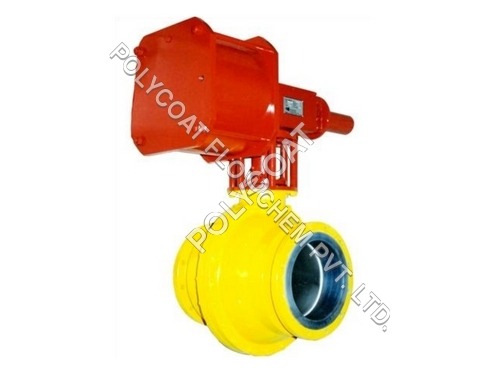

Price:
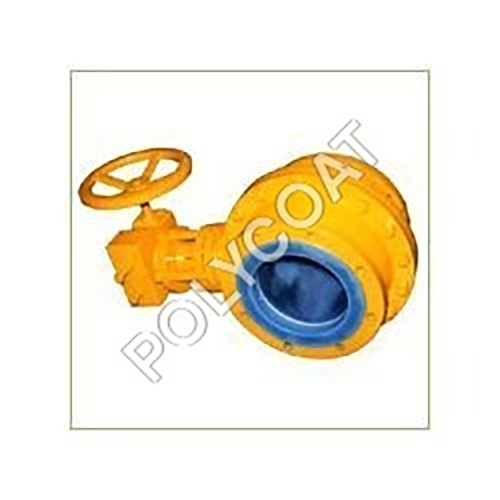
Price 3500 INR / Piece
Minimum Order Quantity : 1 Piece
Caliber : Full Bore
Pressure : Other, PN10/PN16/150#
Connection : Flanged
Application : Chemical, Pharmaceutical, Petrochemical Industry
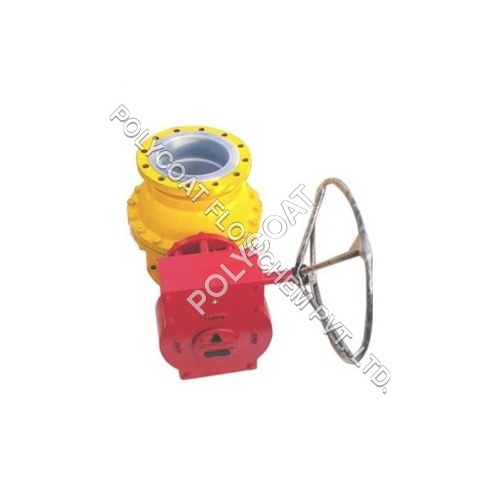
Price 3500 INR / Piece
Minimum Order Quantity : 1 Piece
Caliber : Standard/Full Bore
Pressure : Other, Class 150 to Class 300
Connection : Flanged
Application : Industrial, Chemical, Food Processing, Pharmaceutical
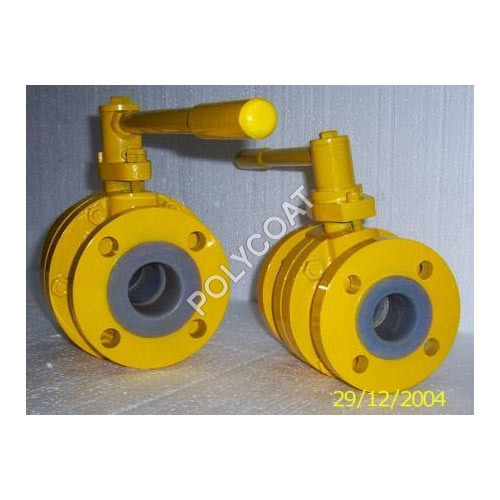
Price 3500 INR / Piece
Minimum Order Quantity : 1 Piece
Caliber : Full Bore
Pressure : Other, PN 10/16, ANSI Class 150/300
Connection : Flanged
Application : Chemical, Pharmaceutical, Petrochemical, Food Processing Industries
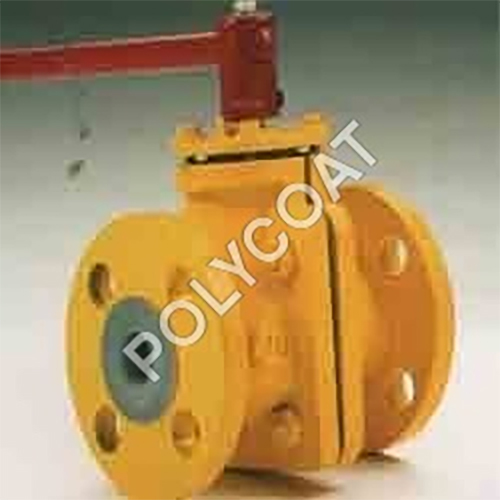
Price 3500 INR / Piece
Minimum Order Quantity : 1 Piece
Caliber : Full bore / standard bore
Pressure : Other, PN10/PN16, Class 150 lbs
Connection : Flanged ends, ANSI B16.5, DIN, or as per customer specification
Application : Chemical processing, petrochemicals, pharmaceuticals, water treatment, power plants


 |
POLYCOAT FLOWCHEM PVT. LTD.
All Rights Reserved.(Terms of Use) Developed and Managed by Infocom Network Private Limited. |




 Send Inquiry

 Send Inquiry
 Send Inquiry
 Send SMS